You Will Watch What We Give You: The Streaming Industry's Long Con on Gen X
There's a specific kind of quiet rage that Gen X has perfected over the decades. It's not the explosive, social-media-ready fury of a generation that grew up performing emotions for an audience. It's the slow burn. The raised eyebrow. The tight-lipped nod that says I knew this would happen while internally filing the betrayal away for future reference.
Streaming services have earned that nod.
Not all at once, and not dramatically. That's what makes it so insidious. It happened the way cable TV happened — incrementally, politely, and with just enough convenience sprinkled in to keep us from noticing how thoroughly we were getting played.
We Have Been Here Before. Literally.
Cast your mind back to the early '90s. You're paying for basic cable. Fine. Then someone explains that the good channels — the ones with the movies you actually want — require a premium tier. So you pay for that too. Then comes the sports package your roommate swears is essential. Then the movie channels split into two separate subscriptions. Then HBO gets its own thing. You're now paying four separate line items for what you were promised was "all the TV."
Fast-forward to 2024. You've got Netflix, Hulu, Max, Peacock, Paramount+, Apple TV+, and you're still somehow one Disney+ subscription away from being able to watch the one show your coworker won't stop talking about. The bundle is back, baby. It just looks different now. It has better graphic design and a much more cheerful customer service chatbot that will absolutely not help you.
Gen X didn't just notice the pattern. Gen X lived the pattern. We're not angry in a surprised way. We're angry in the way you're angry when you call it from the beginning and nobody listens.
The Show Removal Industrial Complex
Here's the specific betrayal that deserves its own congressional hearing: the quiet, unannounced disappearance of content you were absolutely about to watch.
You bookmark something. You add it to your list with genuine, unironic intention. You tell yourself, next weekend, that's the one. And then life happens — a work deadline, a kid's soccer tournament, a two-hour argument with your spouse about whether the living room needs a new rug — and suddenly it's three weeks later. You sit down. You make the popcorn. You navigate to your list.
Gone. Removed from your region. No longer available. Here's a recommendation for something you've never heard of.
The notification that it was leaving? Buried in an email you deleted thinking it was promotional. Which it was. It just also contained the one piece of information you actually needed.
This is not an accident. Content rotation is a deliberate business strategy. Studios yank shows to resell them elsewhere, or to create exclusivity on a competitor's platform, or — and this is the one that really stings — because the licensing deal expired and nobody bothered to renew it because the algorithm said the engagement metrics weren't justifying the cost. Your taste in television is an engagement metric now. Welcome to the future.
The Cancellation Carousel
And then there's the cancellations. Not just removing old content — actively ending new shows that people are watching, mid-story, without warning, leaving entire narrative arcs unresolved because a service decided the subscriber acquisition numbers didn't pencil out.
Gen X has watched this happen enough times now that we've developed a Pavlovian response to enjoying a new series. It goes like this: You find something genuinely good. The writing is sharp. The characters feel real. You're four episodes in and invested in a way you haven't been in years. And then the voice in the back of your head — the one that got burned by Freaks and Geeks getting axed after one season, the one that watched My So-Called Life disappear before Angela Chase figured out her life — that voice quietly says, don't get too attached.
It's not pessimism. It's pattern recognition. Gen X has been doing this long enough to know that the things we love on screens are always, eventually, taken from us. The medium changes. The betrayal doesn't.
The Quiet Return of Physical Media
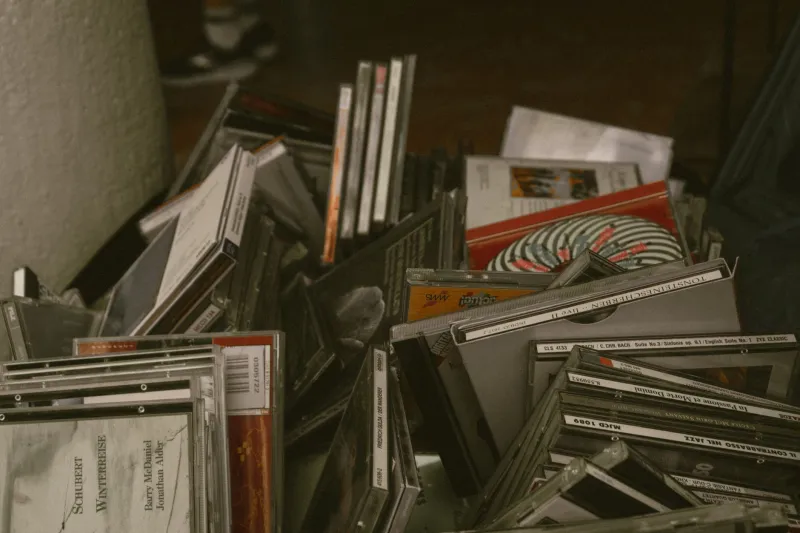
Something interesting is happening in the basements and spare bedrooms of Gen X households across America. The Blu-ray collection is getting organized. The DVD shelf is being dusted off. People are actually buying movies again — owning them, in a format that doesn't require a subscription, a password, a functioning internet connection, or the ongoing goodwill of a corporation that may or may not exist in its current form three years from now.
This isn't nostalgia for its own sake. It's risk management.
When you own a physical copy of Heat or Fargo or The Americans, it doesn't disappear because Warner Bros. decided to shuffle its licensing portfolio. It doesn't get "temporarily unavailable in your region." It sits on a shelf and it works. Every time. Without a monthly fee. Without an algorithm deciding you've watched it enough times that maybe you'd like to try something newer.
Gen X didn't grow up with infinite content. We grew up with a finite number of VHS tapes, a TV Guide circled in pen, and the understanding that if you missed something, it was gone. Streaming was supposed to fix that. Instead it just introduced new and more creative ways to make things disappear.
What We Actually Want
Here's the thing that streaming executives seem genuinely unable to grasp about Gen X: we are not hard to please. We don't need a thousand options. We need the options we chose to still be there when we come back for them. We need to know what we're paying for. We need a service to do the one job it promised to do — give us access to content — without restructuring the entire deal every fiscal quarter.
We watched cable do this. We watched rental stores do this. We've watched music platforms do this. We are not naive. We are not going to be delighted by the newest interface redesign that moved all the buttons to different places for no discernible reason. We are not going to cheerfully upgrade to the ad-free tier after already paying for a subscription that now, inexplicably, has ads.
We're just going to quietly go buy the Blu-ray.
And we're going to feel extremely vindicated about it.
The remote control is still ours. The content, apparently, never was.