We Pay for Cable and We'll Do It Again: A Gen X Defense of the Remote Control
Somewhere around 2015, the internet collectively decided that cable television was the financial equivalent of setting your wallet on fire every month. Cord-cutting became a movement, then a personality type, then a thing people announced at dinner parties like they'd just completed a triathlon. And Gen X — practical, skeptical, deeply allergic to being told what to do — looked at all of it and said: yeah, we'll see.
We're still seeing. The cable bill is still here. And honestly? So is the quiet, stubborn satisfaction of flipping through channels at 11pm and landing on a "Law & Order" rerun we've already seen four times.
The Math That Doesn't Actually Math
Here's the pitch the cord-cutters sold us: drop cable, save money, get exactly what you want. Simple. Clean. Liberating.
Here's what actually happened: Netflix, Hulu, HBO Max (now Max, because apparently that's a thing), Disney+, Peacock, Paramount+, Apple TV+, and whatever ESPN+ has become this week. That's six to eight subscriptions, each billing on a different date, several of which you forgot you had until the charge hit and you spent twenty minutes on hold trying to cancel something called "Philo."
Do the math. Go ahead. We'll wait.
Surprise: you're paying roughly the same amount as a cable package, except now the interface is worse, everything requires a separate login, and half the shows you want to watch are locked behind a tier you're not subscribed to. At least with cable, the confusion was centralized. One bill. One remote. One customer service number you called with the resigned energy of someone filing taxes.
Gen X didn't stay with cable because we're technologically confused. We stayed because we did the math first.
The Comfort of Linear Time
There's something the streaming evangelists fundamentally misunderstand about why people watch television, and it has nothing to do with content libraries or 4K resolution.
Sometimes you don't want to choose.
The paradox of infinite content is that it produces a specific kind of exhaustion that nobody talks about. Scrolling through a streaming homepage for twenty-two minutes before giving up and watching something you've already seen isn't a bug — it's a documented psychological phenomenon. Too many options, decision fatigue, the whole thing. Gen X lived through the era of three channels and a TV Guide. We understand, on a cellular level, the relief of just turning on the TV and watching whatever's happening.
That's what cable still offers. You flip on TNT at 7pm on a Tuesday and there's a movie already in progress — probably something from 1994 with a car chase and a subplot about a briefcase — and you just... watch it. You didn't search for it. You didn't add it to a list. It was simply there, like a neighbor who stopped by without texting first, and somehow that's fine.
Linear TV is a passive experience in the best possible sense. And for a generation that grew up watching Saturday morning cartoons on a schedule dictated entirely by the network, there's a neurological comfort in that structure that no algorithm can replicate.
The Remote as a Skill Set
Let's talk about the remote control, because this is genuinely underrated.
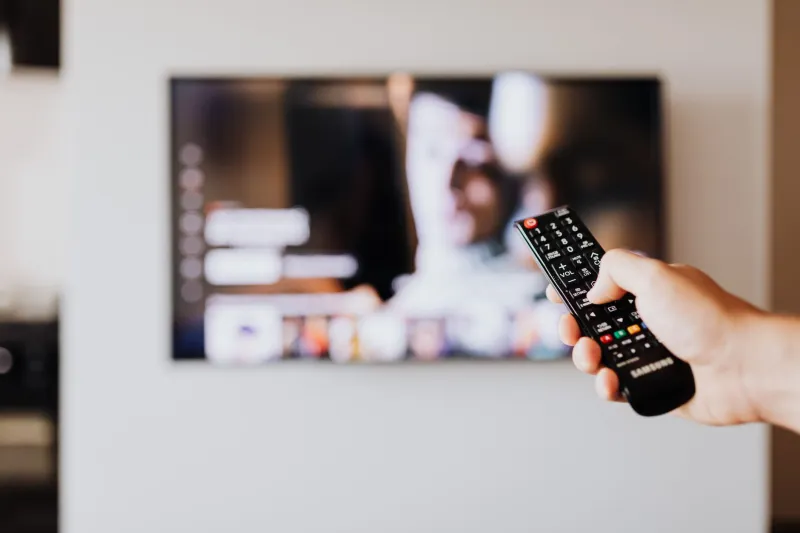
Gen X knows how to use a cable remote. Not in the smug "I read the manual" way, but in the deeply practical "I have been operating this specific type of device for thirty-five years" way. We know what the Guide button does. We know how to set a series recording without accidentally recording every movie that shares a title keyword. We know how to navigate on-demand without it taking four minutes and two reboots.
This is a skill. A minor one, absolutely. But it exists.
Now watch someone under thirty try to find a specific channel on a cable box without using the search function. Watch the confusion. Watch them reach for their phone to look up what channel ESPN is in their market. Meanwhile, Gen X has already clicked directly to it from memory, because we know our local channel lineup the way we once knew phone numbers — not because we're special, but because we've been doing it long enough that it's automatic.
Is this a personality trait? The cord-cutters would say yes, mockingly. We prefer the term "competency."
The Dinner Party Defense
At some point in the last decade, admitting you still have cable became the conversational equivalent of mentioning you still use Internet Explorer. People tilt their head slightly. They say things like "oh, really?" in the tone usually reserved for learning someone still uses a flip phone or doesn't believe in sunscreen.
And Gen X, to its considerable credit, does not flinch.
We've been defending unfashionable choices our entire lives. We kept buying CDs after everyone switched to MP3s. We kept landlines longer than was strictly reasonable. We printed directions from MapQuest when GPS was already available, because we didn't entirely trust a satellite to know about the construction on I-95. We are not a generation that abandons something functional just because something newer exists.
So yes, at the dinner party, when someone asks if we've tried just getting a Fire Stick and a few streaming apps, we smile the smile of someone who has already had this conversation seventeen times and say: we have a system, and it works.
That usually ends it.
What We're Actually Defending
Here's the real thing, underneath all the jokes about cable bills and remote fluency: Gen X is defending a relationship with television that predates the content economy.
We grew up watching TV as an event. Friday nights with TGIF. Sunday evenings with the whole family on the couch. The shared cultural experience of everyone watching the same thing at the same time and talking about it the next day at school. Cable, even in its current bloated form, still carries a faint echo of that. It's scheduled. It's communal. It exists in real time.
Streaming is extraordinary, and we use it — don't get it twisted. But it's a library, not a living room. And sometimes, after a long day of being extremely functional adults in a world that requires constant decision-making, we want to sit down, pick up a remote we already know how to use, and let the television just happen to us.
The cable bill is the price of that. We've decided it's worth it.
And we'll tell you the same thing at the next dinner party.