Congratulations, Millennials: You Just Discovered What We Called Tuesday

Somewhere right now, a 29-year-old is paying $85 for a guided journaling workshop. She's sitting in a sunlit Brooklyn studio, a brand-new Leuchtturm1917 notebook open in her lap, a facilitator with a calming voice telling her to put down her phone and write her thoughts by hand. She is experiencing something she will later describe on Instagram as "life-changing."
We called it homework.
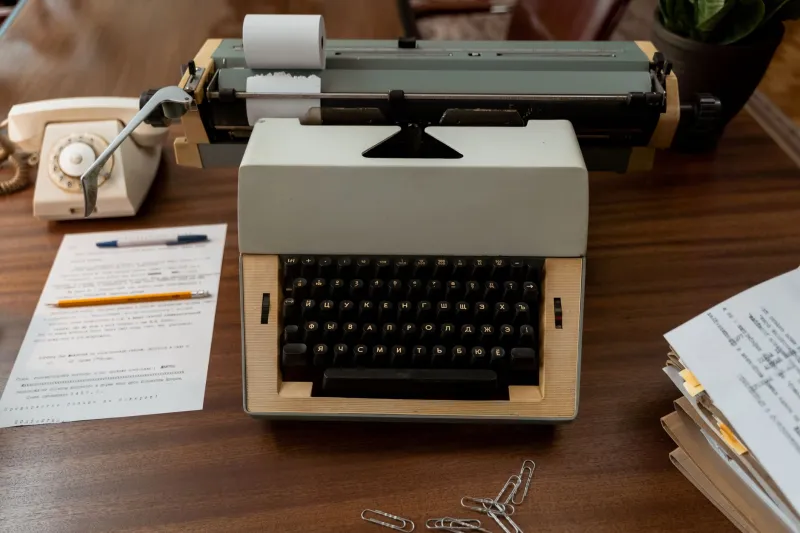
Welcome to the great analog comeback — a cultural moment so deeply ironic that Generation X has been quietly losing its mind about it for the better part of three years. The generation that grew up without smartphones, survived on landlines, and hand-wrote every grocery list is now watching the rest of the world frantically scramble toward the exact lifestyle we allegedly needed to "upgrade" away from. And honestly? It feels pretty good.
The Burnout Economy Finally Found Our Résumé
Here's the thing about notification addiction: Gen X never really had it. Not in the way that younger generations do, anyway. We came of age in a world where being unreachable after 5 p.m. was just called being home. Where a lunch break meant actually leaving your desk — possibly to go to a deli, possibly to sit in your car listening to a cassette tape, but definitely not to answer emails on a handheld computer you carried in your pocket.
Then the internet happened. Then smartphones happened. Then Slack happened. And suddenly the entire working world decided that being perpetually available was not just acceptable but admirable. Hustle culture. Always-on leadership. The badge of honor that was a full inbox.
Gen X adapted, because that's what we do. We downloaded the apps. We learned the platforms. We muted the group chats and then forgot to unmute them and honestly didn't miss anything important. But we never fully bought in. There was always a part of us — the part raised on Saturday morning cartoons and unsupervised bike rides and absolutely zero parental tracking — that knew this was all a bit much.
Turns out, that skepticism was a survival skill.
What They're Selling, We've Been Living
The wellness industry has recently discovered what it's calling "analog therapy." Physical books over e-readers. Handwritten to-do lists. Alarm clocks that are just... alarm clocks. Long walks without AirPods. Actual lunch breaks taken away from a screen. These are being marketed as radical acts of self-care, and companies are charging a premium for the privilege.
There are now apps — and yes, the irony is not lost on anyone — designed to help you use your phone less. There are $300 "dumb phones" being sold to tech workers who want a device that only calls and texts. There are "screen-free Sunday" kits on Etsy. There are forest bathing retreats in Vermont where you pay $600 to walk around in trees without checking your notifications.
Gen X has been doing all of this. Not as a wellness practice. Just as life.
We kept our paper planners not because we were making a statement, but because they worked. We took lunch breaks because our managers in 1994 told us to and we never stopped. We read physical books because staring at a backlit screen for eight hours and then staring at a backlit screen for fun felt insane. We handwrote notes in meetings because we retain information better that way, a fact that neuroscience has since confirmed and LinkedIn has since turned into a 47-slide carousel post.
The Vindication Is Real, and We're Savoring It
Let's be honest about something. For years — maybe a decade and a half — Gen X was on the receiving end of a particular kind of condescension. We were the generation that didn't get it. Too slow to adopt, too stubborn to adapt, too attached to our CDs and our cursive and our insistence on actually speaking to a human being on the phone when we had a billing dispute.
Remember when open-plan offices were going to revolutionize collaboration and anyone who wanted a quiet space to concentrate was basically a dinosaur? Remember when the paperless office was going to make everything more efficient and the people who printed things out were passive-aggressively ruining the planet? Remember when work-life balance was something only people who "weren't serious about their careers" worried about?
Every single one of those assumptions has since collapsed under the weight of its own evidence. Burnout is at record levels. Attention spans are measurably shorter. People are struggling to read long-form content, finish books, sustain focus through a two-hour movie. The always-on culture has produced a generation of exhausted, overstimulated, chronically distracted people who are now desperately searching for the exit.
The exit looks a lot like 1992.
We're Not Smug. (We're a Little Smug.)
Look, we're not here to gloat. That would be beneath us. We are absolutely here to gloat a little bit.
Because there is something deeply satisfying about watching "digital minimalism" become a bestselling book genre when minimalism was just the default setting of our childhoods. About seeing "slow mornings" trend on TikTok when a slow morning used to mean the newspaper hadn't arrived yet. About watching a 26-year-old discover the profound pleasure of a handwritten list and tweet about it like he's the first person to ever experience the satisfaction of crossing something off with a pen.
Bud. We know. We've known.
But here's where Gen X can actually be useful — and we are, quietly, the most useful generation in most rooms — we can serve as proof of concept. We are living evidence that you don't have to choose between being functional in a digital world and maintaining some basic analog sanity. You can have a smartphone and also have a paper calendar. You can use Spotify and also own records. You can answer emails and also take an actual lunch break that does not involve your laptop.
These things are not contradictions. They are just choices. Choices that Gen X has been making, unannounced and unphotographed, for years.
The Real Flex Is Not Needing a Retreat for This
The wellness industry will keep selling analog habits back to people who abandoned them. That's fine. Commerce is commerce. If someone needs to spend $400 on a silent retreat to remember what it feels like to sit quietly without a device in their hand, we're not judging. Recovery looks different for everyone.
But Gen X? We don't need a retreat. We need a Sunday afternoon. We need a library card and a thermostat set to exactly 68 degrees and maybe a cup of coffee that we actually let get hot before we drink it.
We have been unplugging, selectively and without ceremony, this entire time. Not because we're technophobes. Not because we couldn't figure out the app. Because we remember — viscerally, in our bones — what it felt like to be bored in a good way. To be unreachable and fine with it. To finish a thought without a notification interrupting it.
That memory is, it turns out, a competitive advantage.
So go ahead. Buy the guided journal. Book the forest retreat. Download the app that stops you from using apps. We'll be over here, reading a paperback and not posting about it, waiting patiently for the rest of the world to catch up to Tuesday.