Press 1 to Hear This Message Again. And Again. And Again.
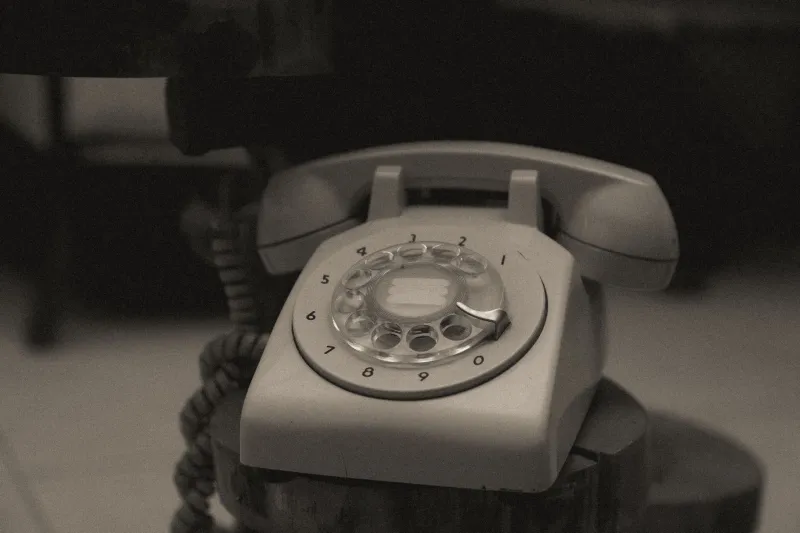
You know exactly which one I'm talking about.
It's probably not labeled. It's probably from a number you've long since memorized or maybe one that no longer connects to anything at all. The audio quality is middling — there's a little background noise, maybe the faint sound of a television, or dishes, or someone calling out from another room. The message itself is completely mundane. A reminder about a birthday dinner. A question about whether you want the blue tablecloth or the white one. A voice saying call me back when you get a chance, I love you.
And you have listened to it approximately four hundred times.
Welcome to the peculiar, quietly devastating world of Gen X's sentimental digital hoarding — a phenomenon that has nothing to do with minimalism, nothing to do with inbox zero, and everything to do with the fact that we are a generation that has watched too many people disappear and figured out, too late, that the phone in our pocket might be the last place their voice still lives.
The Accidental Archive
Here's the thing about voicemails from people who are gone: you never knew they were going to be the last one. That's the part that makes it hit differently every single time you think about it. You didn't sit down with a recording device and ask your mother to say something meaningful for posterity. You didn't capture your best friend's laugh on purpose. You just... didn't delete a voicemail one afternoon in 2019, and now it's the only audio recording you have of a voice you would give almost anything to hear in person again.
Gen X grew up analog and graduated into digital, which means we carry both the instinct to keep things and the technological means to do it almost infinitely. We saved ticket stubs and birthday cards and Polaroids. We kept notes passed in class folded into tiny rectangles. We are the generation that still has a box in a closet somewhere containing items whose value would be completely inexplicable to anyone else on earth. Translating that impulse into the digital space was less a choice than a reflex.
But voicemails are different from photos. A photo captures a moment. A voicemail captures a person — the specific cadence of how they talked, the way they said your name, the little verbal tics you didn't even consciously register until you could no longer hear them in real time. There is something neurologically and emotionally distinct about hearing a voice. It bypasses the intellectual processing of grief and lands somewhere older and more primal. You don't look at a voicemail. You hear someone who loved you, and for ninety seconds, they are somehow still here.
What Younger Generations Don't Quite Get
Spend five minutes on any platform dominated by people under thirty and you will encounter a culture of radical digital impermanence. Stories that vanish. Messages that disappear after viewing. Content explicitly designed to exist briefly and then evaporate. For Gen Z especially, this isn't nihilism — it's just how communication works. Ephemeral is the default.
And honestly? We understand the appeal. We've read the think pieces about how permanence creates anxiety. We've watched our own teenagers communicate in memes and voice notes and reactions that leave no trace. Fine. Good for them. We're not judging.
But we are also the generation that watched the physical world slowly dematerialize — record stores, video rental shops, printed photographs, handwritten letters — and learned, sometimes painfully, that gone tends to mean gone for good. We didn't grow up with a cloud backup of our childhood. If the house flooded, the home movies were ruined. If someone threw away the box of letters, those letters ceased to exist. We have a relationship with loss and permanence that was baked in before we ever owned a cell phone.
So when the digital world handed us a way to keep something that would otherwise be gone forever, we kept it. Obviously we kept it. Did you even have to ask?
The Complicated Math of Letting Go
Now, here is where it gets messy — and Gen X is nothing if not comfortable sitting in the mess.
Keeping a voicemail from your grandmother who died three years ago is not the same thing as being unable to move on. But it's also not not that, either. Grief is not linear, it is not logical, and it does not respond well to being told what it should or shouldn't need. Plenty of us have done the therapy, read the books, done the work — and still, when the phone app asks if we want to delete messages older than thirty days, we tap cancel with a speed that suggests the question was never really a question at all.
There are also voicemails in this particular archive that are more complicated than grief. The ex-partner you haven't spoken to in a decade, whose voice you saved not because the relationship ended badly but because it ended and that was its own kind of loss. The old friend who drifted away geographically and then temporally, the way people do, until suddenly the drift became permanent. The parent you had a complicated relationship with, whose voicemail you kept not because everything was good but because it was real, and real is what you've got.
We are not naive about this. We know what we're doing. Gen X has always known exactly what it's doing — we just occasionally choose to do it anyway.
The Phone Company Is Not Your Friend Here
One genuinely practical note, because we were raised by people who appreciated practical notes: your carrier's voicemail system is not a reliable long-term archive. Phone upgrades, carrier changes, account closures — any of these can result in the quiet, catastrophic deletion of something you cannot replace. If you have voicemails that matter to you, save them. There are apps for this. There are ways to record them directly from your phone's speaker using another device if the technology feels too complicated. This is worth the fifteen minutes it takes.
Because here is the thing about digital artifacts in an age of ephemeral communication: the ephemerality is the default, not the rule. You are allowed to opt out. You are allowed to decide that this particular thing does not disappear just because everything else does.
Memory Is Not a Character Flaw
We live in a culture that has complicated feelings about nostalgia — sometimes celebrating it, sometimes diagnosing it as an inability to engage with the present. Gen X hears this critique and largely ignores it, because we have been ignoring cultural consensus since 1987 and we're not about to stop now.
Keeping a voicemail is not a failure to accept loss. It is, arguably, one of the most human things a person can do — to hold onto the specific, irreplaceable sound of someone they loved, in a world that moves very fast and forgets very easily.
So no, we're not deleting it.
Press 1 to hear this message again.