The Map Is in My Head and That's Final: Gen X's GPS Defiance Problem
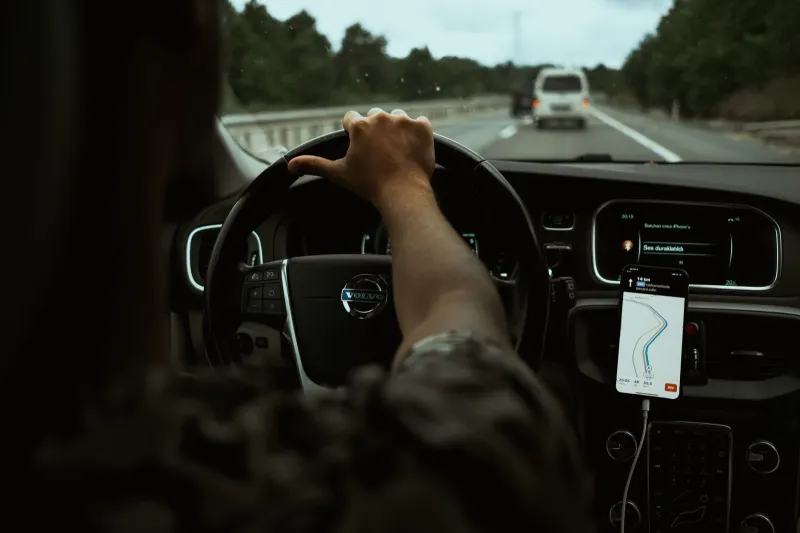
Somewhere on I-94 heading toward an exit I was absolutely certain existed, I spent eleven minutes refusing to open Google Maps. I had a general sense of direction. I had a vague memory of this stretch of highway from a road trip I took in 1997. I had confidence, which, it turns out, is not the same thing as information.
I eventually found the exit. It was two miles past where I thought it was. I did not tell anyone.
This is the Gen X condition.
We Were the Last Generation to Actually Learn the Roads
Here's the thing nobody talks about: we are genuinely skilled at this. Not in a bumper-sticker way. In a real, neurologically-documented, spatial-reasoning way. We grew up navigating with physical maps, memorizing routes by landmark, and triangulating our position using nothing but a sun angle and the location of a Denny's. Before Mapquest. Before printable directions. Before any of it.
Riding shotgun meant something in our era. You were the co-pilot. You held the atlas open with both hands while someone's dad took an exit ramp at fifty miles an hour and said, "Find me 78 West." You found it. You had maybe forty-five seconds. You found it anyway.
That's a skill set. It lives in us like muscle memory. And it makes the existence of GPS feel, on some irrational level, like an insult.
Which is insane. We know it's insane. The apps are objectively, empirically, not-even-close-to-debatable better than whatever is happening in our heads right now. They have real-time traffic. They know about the construction on the overpass. They will reroute us around the accident before we even know the accident happened. They are correct approximately one hundred percent of the time.
And yet.
The Cognitive Dissonance Is Loud and We're Ignoring It
There's a very specific internal negotiation that happens when a Gen X person is driving somewhere unfamiliar. It goes like this:
"I know this area pretty well. I'll just head toward downtown and get my bearings."
Fifteen minutes later: "Okay, this doesn't look right, but I think if I go north I'll hit the main road."
Ten minutes after that: "I'm definitely going north. This is north. The sun is... somewhere. It's overcast. I'm going north."
Five minutes after that, parked in a Walgreens lot, opening Google Maps and then immediately closing it because we recognize the cross street and actually we know exactly where we are.
We don't know where we are.
The Walgreens lot is in a completely different part of the city.
We open Google Maps again. We follow it exactly. We arrive. We tell no one what happened.
This is not a one-time thing. This is every time.
Why Does Asking for Directions Still Feel Like Losing?
Millennials and Gen Z do not experience this. They open the app before they get in the car. They don't think of it as a defeat. They think of it as using a tool, which is technically the correct framing and also somehow infuriating to watch.
For us, there's a psychological weight to it. Opening navigation feels like admitting we can't handle something we used to handle without thinking. It's the same energy as calling tech support, or reading the instructions before assembling the furniture, or asking someone at the hardware store for help. All perfectly reasonable things. All things we will delay doing for an amount of time that is not reasonable.
Some of this is generational stubbornness, which we've practically made into a personality. Some of it is the very Gen X suspicion that technology is quietly making us worse at things we were once good at. If we stop using the spatial reasoning, do we lose it? Is every Waze session quietly atrophying the part of our brain that once navigated the back roads of central Pennsylvania in the dark?
Science says yes, a little bit, actually. Studies on GPS reliance and hippocampal activity suggest that heavy navigation app use does reduce the brain's independent wayfinding engagement over time. So we're not entirely wrong to be suspicious. We're just expressing that suspicion in the least productive way possible, which is refusing to use the helpful thing out of spite.
The Ritual of 'I'll Know It When I See It'
There is a specific phrase that lives rent-free in the Gen X navigation vocabulary: "I'll know it when I see it."
This phrase has never, in the history of its utterance, actually worked. And yet we say it with complete conviction. We say it like it's a strategy. We say it while making a left turn that we are sixty percent sure is correct and forty percent sure is the beginning of a very long story we will later tell at a dinner party.
The thing is, sometimes it does work. We pull into a neighborhood we haven't visited since Clinton's first term and something clicks — the angle of the hill, the particular way the houses sit back from the street, the memory of a specific tree — and we find the place. We park. We walk in like we knew exactly where we were going the whole time.
And that feeling? That hit of pure spatial vindication? That's why we keep doing this. That's the dragon we're chasing every time we dismiss the app and trust the ghost of our 1994 road brain.
It's not rational. It's not efficient. It is, however, deeply us.
Fine. We'll Use the App. But We're Not Happy About It.
Most of us have reached a détente with navigation technology. We use it. We follow it. We've stopped arguing with the voice when it takes us on a route we don't agree with — well, we've stopped arguing out loud. We still argue internally. We mutter. We take the exit it suggested and think I would have gotten there my way too, probably.
But there's a grudging respect forming. A quiet acknowledgment that maybe the satellite knows about the lane closure and we do not. That maybe real-time traffic data is more reliable than vibes. That maybe the app isn't attacking our identity — it's just trying to get us to the restaurant before our reservation expires.
We parallel parked without sensors. We changed lanes without cameras. We navigated the pre-internet American highway system with a folded paper map and sheer determination, and we are genuinely proud of that in a way that probably requires some reflection.
But we also live here, in the present, where the phone knows the fastest route and we are running seven minutes late.
So yes. Fine. We're opening the app.
We knew it was going to come to this.