Keep the Receipt: Why Gen X Will Never, Ever Trust a 'Hassle-Free' Return Policy
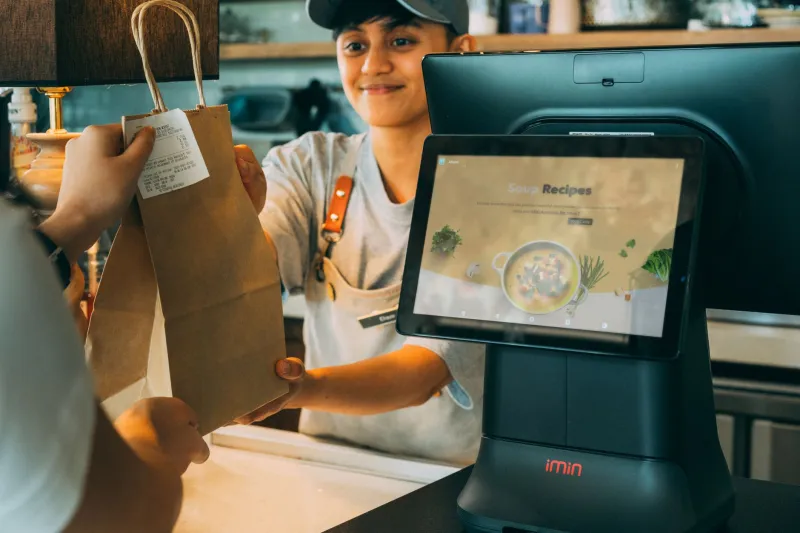
Somewhere in my house — and I mean this literally, I could find it inside of four minutes — there is a manila envelope. Inside that envelope are receipts. Not just recent receipts. Receipts from 2019. A receipt from a Sears that no longer exists. A receipt for a lamp I still own and have no plans to return, but whose receipt I will apparently be burying with me when I die.
This is not a quirk. This is not a character flaw. This is survival behavior, deeply encoded into the Gen X nervous system by years of retail experiences that were, to put it charitably, adversarial.
And no amount of "free returns, no questions asked" is going to undo that wiring. Not in this lifetime.
The Era That Made Us This Way
Let's set the scene. It's 1988. You are thirteen years old. You have saved up lawn-mowing money for six weeks to buy a cassette tape or a pair of jeans or, if you were particularly ambitious, some piece of electronics that came in a box covered in promises it could not keep. You get home. Something is wrong — defective, wrong size, just deeply not what you expected based on the packaging.
You go back to the store.
The person behind the counter looks at you like you have personally insulted their entire bloodline. They ask for your receipt. You have it, because your mother told you to keep it, and your mother was not raising a fool. They examine it under fluorescent light like it might be counterfeit. They call a manager. The manager sighs audibly. There is a form. There is a store credit — not cash, never cash — and it expires in thirty days and can only be used on items that are not on sale, which is everything you actually want.
You leave with a gift card to a store you don't particularly like, having spent forty-five minutes of your Saturday being treated like a criminal for the crime of wanting something that worked.
That experience does not leave you. It becomes load-bearing architecture in your psyche.
'No Questions Asked' Is a Trap and We Know It
Here's what younger generations seem to genuinely not understand about Gen X: we don't distrust easy return policies because we're paranoid. We distrust them because we remember when they didn't exist, and the shift feels too sudden, too cheerful, and frankly too good to be true.
Zara wants me to drop an unwanted blouse in a QR-coded bag and hand it to a UPS driver? Amazon will pick it up from my porch without a label? Target will take something back sixty days later, no receipt required, just vibes?
Absolutely not. That is a setup. I don't know for what, exactly, but I am not walking into it.
Somewhere in the fine print — and there is always fine print, we were raised on fine print — there is an exclusion. There is a window that closed yesterday. There is a condition that voids the policy. There is a manager who will sigh at me, and I have not emotionally prepared for that sigh, and I will not be caught off guard.
So instead, I keep the sweater.
The Sweater Situation
Every Gen Xer has a sweater. Or a pair of shoes. Or a kitchen gadget still in the box on a shelf in the garage. Something that was wrong the moment we got it home — wrong color in real light, wrong fit, wrong everything — but that we have decided, on some level, we are simply going to live with rather than navigate the return process.
My personal sweater is a heather gray pullover that is approximately one size too small and has a neckline that sits in exactly the wrong place on my collarbone. I have worn it twice. I will wear it again. I will wear it until it disintegrates. Returning it was always theoretically possible, but the window in which I felt emotionally prepared to do so has long since closed, and now it's just mine. It lives here. We have an understanding.
This is not irrational. This is a calculated trade-off. The discomfort of the sweater is finite and predictable. The discomfort of the return process — the line, the explanation, the possibility of being told no, the low-grade shame of the whole transaction — is a known quantity that I have decided costs more than the sweater is worth.
Millennials and Gen Z look at this logic and short-circuit. They return things constantly. Gleefully. They buy three sizes and send back two. They treat retailers like a lending library. They have no memory of the world that made returns feel like a confrontation, and honestly, good for them. Must be nice.
The Receipt Envelope Is Not Going Anywhere
I have tried, in recent years, to adapt. I have accepted digital receipts. I have, occasionally, initiated a return within a reasonable window. Once, in 2022, I returned a jacket to an outdoor retailer using a prepaid label and felt so unsettled by how smoothly it went that I didn't buy anything from them for three months out of pure suspicion.
But the envelope stays. The physical receipt for anything over forty dollars goes into the envelope, where it will remain until I am absolutely certain — cosmically, legally, spiritually certain — that the return window has closed and I am free to throw it away. Which, if we're being honest, means it stays in the envelope indefinitely.
My kids think this is insane. My kids also grew up in a world where you could return a Halloween costume on November 1st with a straight face, so their opinion on what constitutes reasonable consumer behavior is not one I weight heavily.
What We Actually Want
Here's the thing nobody talks about: Gen X doesn't want to return things. We want to buy the right thing the first time, bring it home, and have it be exactly what we expected. We want the transaction to be complete. Finished. Done. The return is not a feature — it's evidence that something went wrong, and we would very much prefer things not go wrong.
We research purchases. We read the actual description. We check the dimensions with a tape measure before ordering furniture online, like adults. We are not browsing and impulse-buying and returning as a sport. We are trying to get it right on the first pass so that we never have to speak to a customer service representative again.
The hassle-free return policy is, for us, a safety net we sincerely hope never to need. And just in case we do need it, we will keep the receipt, in the envelope, filed under "probably fine but just in case," right next to the warranty card for an appliance we've owned since the second Obama administration.
Because some habits aren't irrational. Some habits are just the scar tissue of knowing exactly how bad things used to be — and not quite believing, even now, that they've really changed.