Check, Please? Gen X's Deeply Uncomfortable Relationship With Asking for the Bill
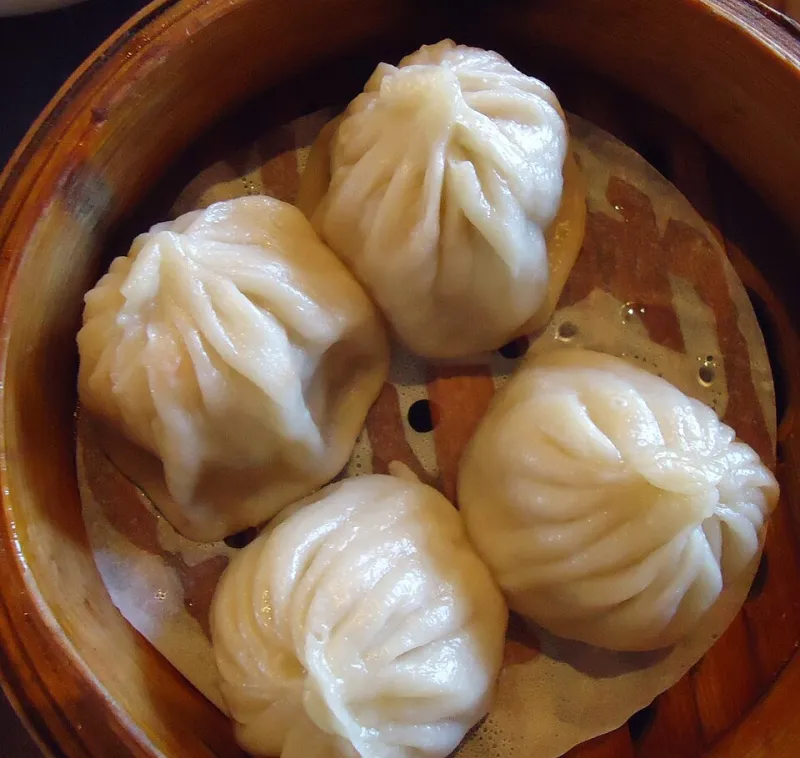
Photo: Tomwsulcer, CC0, via Wikimedia Commons
The meal is over. Has been over, technically, for about twelve minutes. The plates have been cleared. The bread basket is a crime scene. Your dining companion has taken a sip of water they didn't want just to have something to do with their hands. You have both made meaningful eye contact with the server at least four times. Nothing has happened. Neither of you has said anything. You will sit here until either the server materializes with the check on their own initiative or one of you dies.
This is Gen X dining. Welcome.
Nobody Taught Us This Part
Here's a social interaction that Millennials apparently handle without breaking a sweat: raising a hand, making eye contact, and saying some version of "can we get the check when you get a chance?" Simple. Direct. Functional. Takes four seconds. Gen X, as a cohort, would sooner fake a medical emergency.
It's worth asking why, because the behavior is genuinely strange when you look at it from the outside. We're not shy people, broadly speaking. We'll tell you exactly what we think about your life choices, unsolicited, in a Home Depot parking lot. We've been in arguments on the internet since before most people knew what the internet was. We are not, as a rule, conflict-averse.
And yet. The check.
The prevailing theory — and it's held up through years of informal field research conducted at Applebee's, upscale bistros, and every type of restaurant in between — is that asking for the check feels like an imposition. Like we're rushing someone. Like we're being difficult. And Gen X, despite its reputation for not caring what anyone thinks, was raised in a very specific environment of not wanting to be a bother.
We were the latchkey kids. We figured things out ourselves. We did not ask for help. We definitely did not flag down adults to make requests on our behalf. You sat quietly and waited until the situation resolved itself, or you handled it without making a scene. Both of those options are, in fact, available at a restaurant. Neither of them is "ask for the check."
The Eye Contact Olympics
What we do instead is a masterclass in passive communication that would be impressive if it weren't also kind of exhausting.
First, there's the Meaningful Glance. This is sustained eye contact with the server from across the room, held just long enough to communicate we are ready without technically doing anything. If the server makes eye contact back and then goes to another table, we do not escalate. We wait. We recalibrate. We try again in four minutes.
Then there's the Wallet Reach. This is the physical performance of patting your jacket pocket or picking up your purse and setting it on the table in a way that signals readiness. It means nothing to anyone except you, but it feels like progress.
The Card on the Table is a more advanced move — actually placing your credit card or a folded bill on the table as a visual signal. This works occasionally. When it doesn't work, you have to sit there with your Visa card just sitting out like you're trying to sell it.
And finally, when all else fails, there's the Loud Conversation Pause. You and your dining companion simply stop talking, simultaneously, in a way that creates an obvious lull that you both hope the server will somehow sense from fifteen feet away and interpret correctly. They usually don't. You sit in silence. The silence becomes awkward. You start talking again about something neither of you cares about.
At no point in this process does anyone say, out loud, with their human mouth, "excuse me, could we get the check?"
The Cash Tip as Emotional Artifact
The other distinctly Gen X restaurant behavior is the cash tip, and it operates on a completely different frequency than the check issue. While we will not ask for the bill, we will absolutely leave a carefully calculated cash tip that communicates exactly how we feel about the service — but only to ourselves, because we'll be gone by the time anyone finds it.
The cash tip is the passive-aggressive Post-it note of the dining world. It's the thing we do instead of saying anything. Great service gets a great tip, and we feel good about that but never say so. Mediocre service gets a still-fine-but-slightly-pointed tip, and we feel like we've made a statement, even though the statement is completely invisible to everyone involved. We've had entire internal monologues about service quality that resolved themselves into a pile of singles and a five, left under a water glass, communicating nothing to no one.
Apps have made this worse, by the way. Venmo-ing a server a tip, or doing it through the restaurant's iPad payment system, removes the last physical vestige of the transaction. There's no artifact. It's just numbers. Gen X does not fully trust transactions that leave no artifact.
Is This Trauma or Just Stubbornness?
Look, "generational trauma" is a phrase that gets deployed pretty liberally these days, and we're not going to be dramatic about a restaurant check. But there is something real in the observation that Gen X was broadly raised to be self-sufficient in a way that occasionally tips over into an inability to make simple requests of other humans.
We were told, explicitly and implicitly, that needing things was inconvenient. That asking for things was an imposition. That the correct posture was to wait, observe, and handle whatever came your way without making anyone else's job harder. Apply that framework to a restaurant, and you get a table of adults performing elaborate nonverbal theater rather than saying four words to a person whose entire job is to bring them things.
Alternately, it's possible we're just stubborn and a little socially weird in ways we've never had to confront because, until recently, there wasn't an app that could just handle this for us.
Because here's the thing: OpenTable and Toast and every modern restaurant payment system now has a feature that lets you request the check from your phone, pay at the table, and leave without any human interaction whatsoever. And Gen X has adopted this feature with a speed and enthusiasm that suggests we didn't actually want the interaction — we just didn't want to ask for it.
Given the option to leave silently, on our own terms, without making eye contact or saying words? We are gone. The table is empty. The tip was in cash. Nobody saw us leave.
Perfect. That's exactly how we wanted it.