Ring, Ring: Gen X Is Plugging Back In and It's Not a Bit
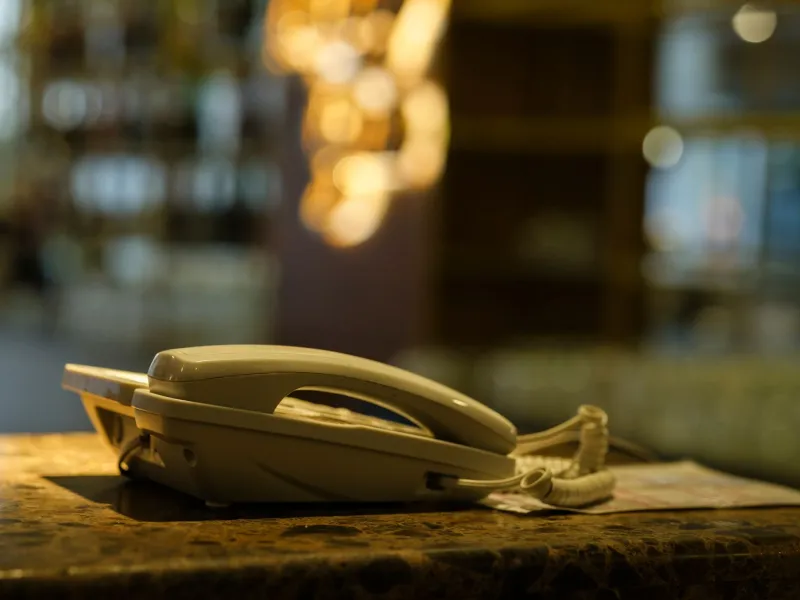
Let's set the scene. It's 1987. You're twelve years old, stretched across the kitchen floor, tangled in a spiral cord that somehow reaches the pantry, whispering to your best friend about whatever mattered most that week. The phone was attached to the wall. You were attached to the phone. Your mom was yelling at you to get off it. Life was comprehensible.
Fast forward to now. Your smartphone is a surveillance device, a gambling app delivery system, a source of hourly existential dread, and — somewhere buried under seventeen notification badges — a thing you can also use to call people. Gen X has been staring at this situation for years with that particular brand of exhausted skepticism we've been perfecting since Reagan was in office. And quietly, without making a whole thing of it, a growing number of us are doing something genuinely unexpected: we're plugging landlines back in.
Not as a joke. Not as a conversation piece. As a choice.
You Can't Screenshot a Dial Tone
Talk to anyone in Gen X who's made the switch — or the return, really — and the first thing you notice is that none of them are embarrassed about it. That alone is remarkable. These are people who survived the transition from cassettes to CDs to MP3s to streaming and have a finely tuned radar for what's actually an upgrade versus what's just change wearing upgrade's clothes.
Denise, 49, a project manager in Columbus, Ohio, reinstalled a landline two years ago after her smartphone was compromised in a phishing scam. "The part that got me wasn't even the security thing," she says. "It was realizing that I had become completely dependent on a device that a stranger in another country could basically turn into a weapon against me. A landline doesn't have a camera. It doesn't know where I am. It just rings."
That simplicity — almost offensive in its plainness by 2024 standards — is exactly the point. The landline doesn't run out of battery during a power outage if it's a traditional copper-line model. It doesn't need a software update before you can answer it. It doesn't serve you an ad for something you mentioned out loud three days ago. It is, in the most boring and beautiful way possible, just a phone.
The Reliability Argument Nobody Wants to Hear
Here's a thing the tech industry has successfully convinced us to forget: landlines, particularly those still running on copper infrastructure, work when cell towers don't. Hurricanes, ice storms, the kind of regional grid chaos that's becoming less of a freak occurrence and more of an annual tradition in large swaths of the country — these are moments when your 5G signal becomes a decorative icon and the old wired phone on the wall becomes the most important object in your house.
Gen X grew up being told to be self-sufficient. Latchkey kids who let themselves in, made their own snacks, navigated the afternoon hours between school dismissal and a parent getting home without a helicopter in sight. The landline fits neatly into that same psychological framework: it's a backup that doesn't require the internet, a carrier's goodwill, or a charged battery to function. It's infrastructure you actually own a piece of, rather than rent access to from a corporation that can change its terms of service on a Tuesday afternoon.
Marcus, 52, a high school teacher in suburban Atlanta, put it bluntly: "I tell my students to have a plan B for everything. Then I realized my entire communication system was one dropped contract away from nothing. I got a landline. It felt like putting on a seatbelt."
Opting Out of the Permanent Record
There's another layer here that goes beyond reliability, and it's the one Gen X is least likely to say out loud at a dinner party but absolutely discusses in group texts: the surveillance piece.
Smartphones are extraordinary tracking devices that also make calls. Every app, every interaction, every location ping contributes to a data profile that is bought, sold, analyzed, and monetized in ways that would make the most paranoid Cold War spy novelist blush. Gen X — a generation that grew up being told the government might be listening, that read 1984 in high school English class and thought "yeah, probably" — has had a slow-building, deeply personal reckoning with this reality.
The landline, whatever its limitations, doesn't know your location. It doesn't harvest your contact list. It doesn't cross-reference your calls with your browsing history to decide what to sell you. It is, in the vocabulary of 2024, profoundly non-invasive. And for a generation that's increasingly exhausted by the cost of participation in digital life, that blankness feels less like deprivation and more like breathing room.
"I'm not delusional," says Renee, 47, a freelance graphic designer in Portland, Oregon, who has both a landline and a smartphone. "I know the landline company has my billing info. But my cordless landline handset isn't listening to my conversations to sell me vitamins. That's the bar we're at now. I've made peace with the bar."
The Rotary-Adjacent Renaissance
It would be incomplete to write about this trend without acknowledging the aesthetic dimension, because Gen X is not a generation that does things without at least some awareness of how they look. The market for vintage-style phones — think push-button desk sets, replica rotary dials, even genuine refurbished Western Electric models from the '70s — has quietly ticked upward. Etsy, eBay, and specialty electronics resellers report consistent interest from buyers in the 45-to-60 age range.
Is some of this nostalgia? Absolutely. Humans are sentimental creatures and Gen X is no exception, despite our best efforts to pretend otherwise. But the purchases aren't purely decorative. People are actually plugging these things in. The vintage phone sitting next to the coffee maker isn't a prop — it's connected to an actual phone line, and when it rings with that unmistakable mechanical bell, someone picks it up.
There's something quietly defiant about that. In a world that has decided every surface should be smart, every device connected, every moment of your life legible to an algorithm, choosing a dumb phone on a wire is a statement. Not a loud one. Gen X doesn't really do loud statements anymore. But a statement nonetheless.
The Part Where We Admit This Isn't For Everyone
Fair is fair: landlines cost money, copper infrastructure is being phased out in parts of the country, and VOIP-based landline alternatives have their own dependencies on internet connectivity. This isn't a perfect solution. Gen X, of all generations, has no interest in pretending anything is perfect.
But perfect was never the goal. The goal is a little more breathing room. A little less of your personal data as a commodity. A phone that rings when someone calls it, works when the power is sketchy, and doesn't try to sell you something between calls.
We didn't grow up expecting technology to be our friend. We grew up watching it become one thing, then another, then something we barely recognized. We adapted, every single time, because that's what you do.
This time, a few of us are adapting backward. And it turns out backward has excellent call quality.