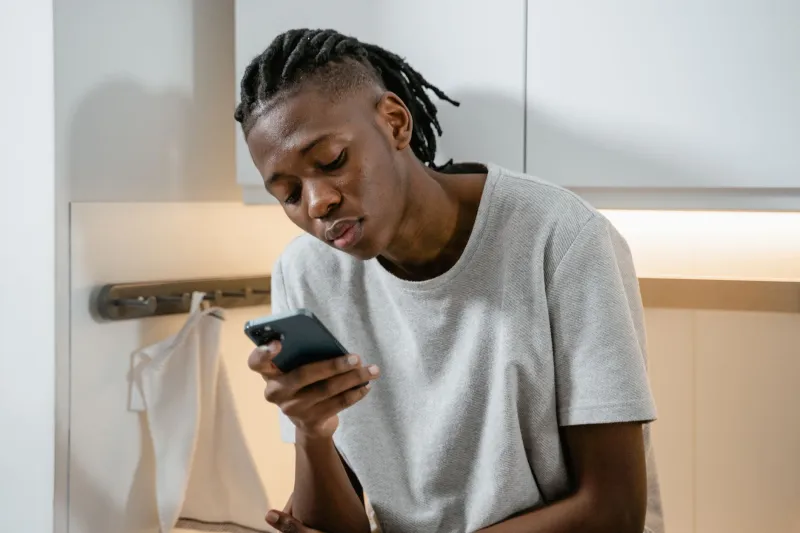
Ink-Stained and Unapologetic: Gen X's Very Deliberate Return to Paper
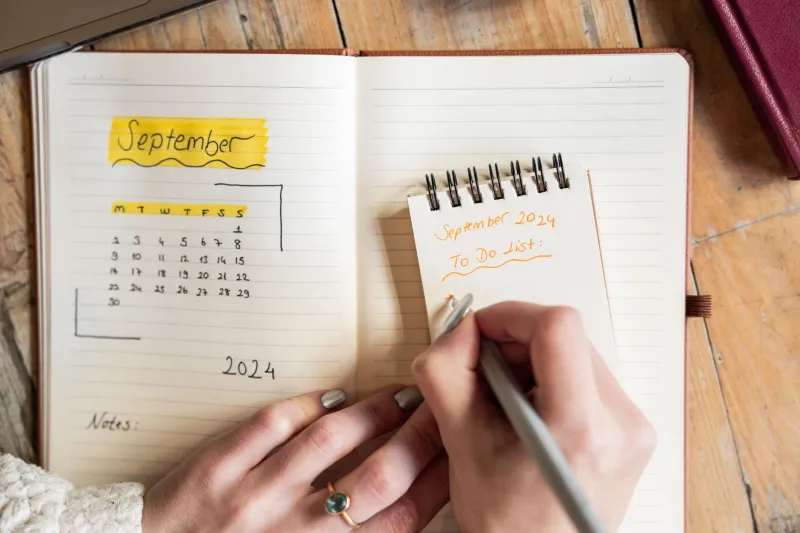
Somewhere between the fourteenth Slack notification and the third app asking to 'send you helpful reminders,' Gen X quietly picked up a pen and refused to put it down. This isn't nostalgia — it's a full-throated rebellion wrapped in a Moleskine cover. Welcome to the analog uprising, and yes, it was handwritten.
If you've been to a Target lately — and let's be honest, you have, because nobody just goes to Target once — you may have noticed something peculiar happening in the stationery aisle. It's not just Millennials hunting for washi tape or Gen Z buying journals to aestheticize on TikTok. There's a quieter, slightly more cynical demographic standing in that aisle with genuine purpose, loading up on fine-point Microns and graph-ruled notebooks. That's us. That's Gen X. And we are absolutely done with the digital everything.
The Notification That Broke the Camel's Back
Here's the thing about growing up in the '70s and '80s: we didn't have a choice but to write things down. Phone numbers, homework assignments, the lyrics to Depeche Mode songs copied off the radio — paper was the operating system. We were the generation of Post-it notes plastered to the refrigerator, of day planners stuffed with receipts and business cards, of spiral notebooks that doubled as emotional journals when life got weird in 1994.
Then came the smartphone era, and we dutifully migrated. We downloaded the apps. We synced the calendars. We let Google tell us when our dentist appointment was. And for a while, it felt like progress.
Until it didn't.
"I hit a wall about two years ago," says Michelle, 49, a project manager in Columbus, Ohio, who asked that her last name not be used because, as she put it, "I don't need my entire LinkedIn knowing I've gone full paper." "I had five different apps managing my life and I still missed my kid's orthodontist appointment. I went out and bought a planner from the office supply store — a paper one — and I haven't looked back. My whole team thinks I'm eccentric. I'm fine with that."
Michelle is not alone. Not even close.
It's Not a Trend. It's a Rejection.
Let's be clear about something: when Gen X does something, it rarely qualifies as a 'trend' in the way the media likes to package it. We didn't suddenly discover vinyl records — we never stopped buying them. We didn't 'rediscover' cooking from scratch — we just stopped pretending meal kits were a personality. And this return to handwriting isn't a Pinterest phase. It's a considered, deliberate pushback against the exhausting premise that every aspect of life should be digitized, optimized, and accessible from a glass rectangle in your pocket.
Dave, 52, a high school history teacher in Tucson, Arizona, started keeping a handwritten journal again last fall after a decade-long hiatus. "There's something that happens when you write by hand that just doesn't happen when you type," he says. "You slow down. You actually think about what you're writing before you write it. My phone is a slot machine. My journal is not."
That slot machine metaphor is doing a lot of work, and it should. The same generation that watched the internet get invented, watched it get monetized, and then watched it get weaponized for attention has a very particular relationship with digital fatigue. We're not shocked by it. We're just tired of pretending it isn't real.
The Bullet Journal Finds Its People
If you haven't heard of bullet journaling, welcome to the last five years. The system — developed by designer Ryder Carroll and built around rapid logging, migration, and intentional organization — has been around since 2013, but its Gen X adoption has quietly accelerated in ways that don't always show up on Instagram. Because, as it turns out, a lot of Gen X bullet journalists aren't posting their spreads. They're just... using them.
"I started bullet journaling because I saw it on YouTube and thought it looked interesting," admits Karen, 47, a freelance graphic designer in Portland, Oregon. "But I immediately stripped out all the decorative stuff. No stickers, no color coding, no brush lettering. Just a black pen and a dot grid notebook. It's basically how I used to keep a planner in college, except now I understand why it works."
That pragmatic adaptation is quintessentially Gen X. We didn't invent a new system — we recognized an old one, claimed it, and removed the parts that felt performative. Which, if you think about it, is also how we approached parenting, career pivots, and our relationship with therapy.
The Lost Art of the Actual Letter
And then there's the correspondence piece, which is where things get genuinely moving in a way that's almost uncomfortable to admit.
Handwritten letters — not cards, not thank-you notes, but actual multi-page letters — are making a quiet comeback among Gen X adults who grew up writing them to summer camp friends and college roommates before email existed. Several people interviewed for this piece mentioned exchanging handwritten letters with old friends, former colleagues, even estranged family members, citing something ineffable about the format that text and email simply can't replicate.
"I wrote a letter to my best friend from high school last Christmas," says Tom, 51, a software developer in Chicago who found the irony of his profession entirely lost on no one, including himself. "We'd been texting for years but kind of drifting. I wrote her four pages by hand about what the last decade had actually been like. She wrote back eight pages. We've been writing back and forth ever since. I don't know how to explain it except that it felt real in a way that a text thread doesn't."
The Satisfying Physics of Ink on Paper
There's also a purely sensory dimension to this that shouldn't be underestimated. The tactile satisfaction of a good pen meeting quality paper — that smooth, deliberate drag of ink — is a physical experience that no app can replicate, no matter how many 'paper feel' screen protectors exist. Gen X grew up with that sensation as default. Reclaiming it isn't regressive. It's restorative.
And maybe that's the cleanest way to frame this whole analog rebellion: not as a rejection of technology wholesale, but as a reclamation of the parts of ourselves that existed before every moment required a notification. We're not anti-progress. We're pro-quiet. We're pro-thinking before we write. We're pro-not having our grocery list require a software update.
The pen is still mightier than the sword. Turns out, it might also be mightier than the algorithm.
Now if you'll excuse us, we have some correspondence to finish. In cursive. On purpose.